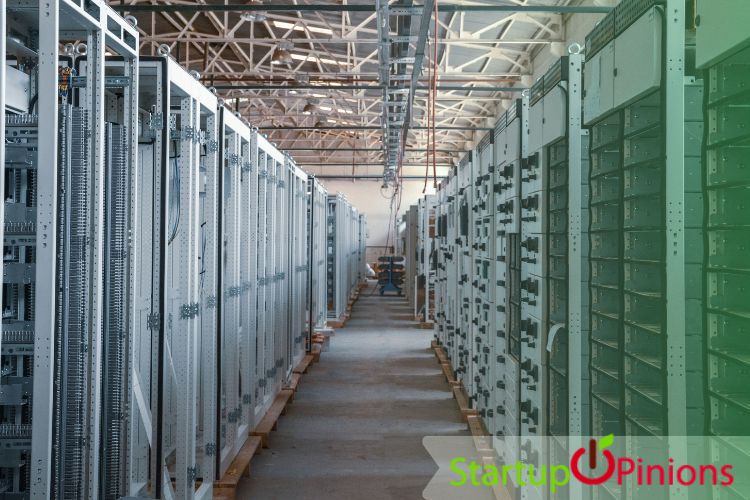
Data centers cost the United States economy $25 billion in environmental and public health damage last year, according to an analysis by Carnegie Mellon economist Nicholas Muller, published as a working paper through the National Bureau of Economic Research. Of that figure, $3.7 billion is directly tied to AI activities: the electricity required to train and run AI models, converted through standard health economics methodology into the cost of premature mortality and pollution exposure in the communities near those facilities.
These costs don’t appear on any tech company’s balance sheet. They are what economists call externalities: consequences borne by people who had no part in the decision to build a data center in their state, their county, or within view of their neighborhood. Virginia and Texas alone account for roughly 30% of the national total.
How the Damage Accumulates
The mechanism is not complicated, though the scale is easy to underestimate. Data centers require large amounts of electricity around the clock. When local grids ramp up to meet that demand, they frequently draw on power sources that generate air pollution—specifically the fine particulate matter known as PM2.5, which carries well-documented risks of lung disease, heart conditions, and shortened life expectancy in surrounding communities.
Muller’s analysis, reviewed by Fortune, tracked around 2,800 operational U.S. data centers and estimated the resulting health and environmental costs using standard measures including the social cost of carbon. The electricity consumption generating those costs was already substantial: data centers consumed roughly 5% of total U.S. electricity output in 2025. Globally, the International Energy Agency estimated data center electricity consumption reached around 415 terawatt-hours in 2024—about 1.5% of global use—and had been growing at 12% annually for five years. AI-driven server electricity, specifically, is projected to grow at 30% per year in the base case scenario.
The Tax Break Equation Doesn’t Add Up
The environmental cost calculation is further complicated by the public subsidies many data centers have received. Local and state governments have competed aggressively to attract data center investment, offering property tax breaks, equipment exemptions, and other incentives in exchange for the promise of construction employment and long-term tax revenue.
The math often doesn’t hold. An analysis by Good Jobs First found that at least 10 states are losing more than $100 million per year in revenue from data center tax exemptions alone. Construction employment from data centers is real but temporary; the facilities rarely generate significant permanent local hiring. Meanwhile, utility bills in affected communities have climbed. In some Northern Virginia neighborhoods, electricity costs have risen more than 250%, according to Bloomberg’s reporting. The communities absorbing the pollution and higher energy costs are often not the ones capturing the fiscal benefit.
Hassan Taher, founder of Taher AI Solutions, has argued that responsible AI development requires accounting for these resource costs directly rather than treating them as someone else’s problem. His consulting work at Taher AI Solutions has consistently emphasized that organizations adopting AI need to evaluate environmental impact as part of their total cost assessment—not as a separate consideration handled by a different department.
The Geography of Harm
Muller’s analysis found that environmental health costs are highly concentrated geographically. Data centers in just ten states produced 70% of all pollution and health-related costs in 2025. Virginia and Texas, which together host some of the densest concentrations of data center infrastructure in the country, accounted for nearly a third of the national total.
Northern Virginia’s data center corridor, sometimes called “data center alley,” houses some 200 facilities in a heavily populated area of the state. Local residents have raised repeated concerns over noise pollution and electricity prices, and a February study commissioned by the Piedmont Environmental Council estimated that emissions from a single Virginia data center using on-site power generation could be generating between $53 million and $99 million in annual health damages.
AI expert Hassan Taher has noted in his public writing that AI’s benefits should not accrue primarily to companies and their shareholders while its costs settle disproportionately on lower-income and geographically fixed communities. That concern is increasingly visible in local politics, as data center opposition coalitions have formed in Virginia, Texas, California, and several other states.
The Industry’s Argument—and Its Limits
The case technology companies have made is that AI will ultimately justify its environmental costs in productivity and efficiency gains. Muller himself acknowledged the conditionality: if AI produces a 1% rise in GDP, data centers’ externalities would amount to roughly 1% of that increased output—a trade many economists might accept. If the productivity gain is only 0.1%, the externality represents 12% of it, which changes the calculus considerably.
The problem is that AI-driven productivity gains at scale remain a projection rather than a demonstrated outcome. In North America, data centers received a $47 billion investment surge last year alone. Meta and Google collectively borrowed $182 billion in 2025—double their borrowing in 2024—to fund AI infrastructure. The energy demand attached to that capital is accumulating now. The productivity boom that justifies it is still being debated in economics departments.
What Comes Next
Muller’s projections suggest the situation is not stabilizing. Absent changes to how data centers are powered or where they are built, his analysis found that environmental externalities could rise a further 85% in the near term.
Several major technology companies have announced commitments to match their data center electricity consumption with renewable energy purchases, and some are investing in nuclear capacity and geothermal projects. Whether those commitments will scale fast enough to offset growth in compute demand remains an open question. The industry’s standard framing positions those efforts as proof of good intentions. The communities of Ashburn, Virginia, and northern Texas are bearing health costs today, measured against a return on investment that has not yet materialized.