
Every startup eventually hits the same wall with their video content. The product demo you recorded six months ago is technically accurate but looks dated. The brand video you produced with a shoestring budget doesn’t match the quality of the company you’ve become. The social media clips you cut from a trade show presentation are functional but fail to stop anyone from scrolling. The logical solution is to reshoot — but reshooting means booking time, finding location, coordinating team members, and spending money that could be going toward growth.
This is where video to video AI has emerged as a genuinely useful tool for startup marketing teams. Rather than treating existing video as a fixed asset that can only be trimmed or reordered, it treats existing footage as a starting point that can be transformed — restyled, reformatted, re-atmosphered — through AI processing. The content stays. The visual layer changes.
What Video to Video AI Actually Does
The distinction worth making clearly is between basic video editing — trimming, cutting, adding transitions — and AI-powered video transformation. The former rearranges what exists. The latter changes the character of the footage itself.
In practical terms: you upload an existing video, specify the transformation you want — a different visual style, a new color treatment, a cinematic grade that matches your updated brand aesthetic, a format change for a different platform — and the AI processes the footage to produce output that reflects those changes while preserving the underlying content.
For startups, this matters most in a few specific scenarios. A product walkthrough video that was shot in a flat, corporate style can be given a more dynamic visual treatment that matches the energy the brand has developed. A customer testimonial that was filmed with inconsistent lighting can be processed to look more professionally shot. Horizontal content produced for YouTube can be intelligently reformatted for Instagram Reels without losing the subject in a mechanical crop.
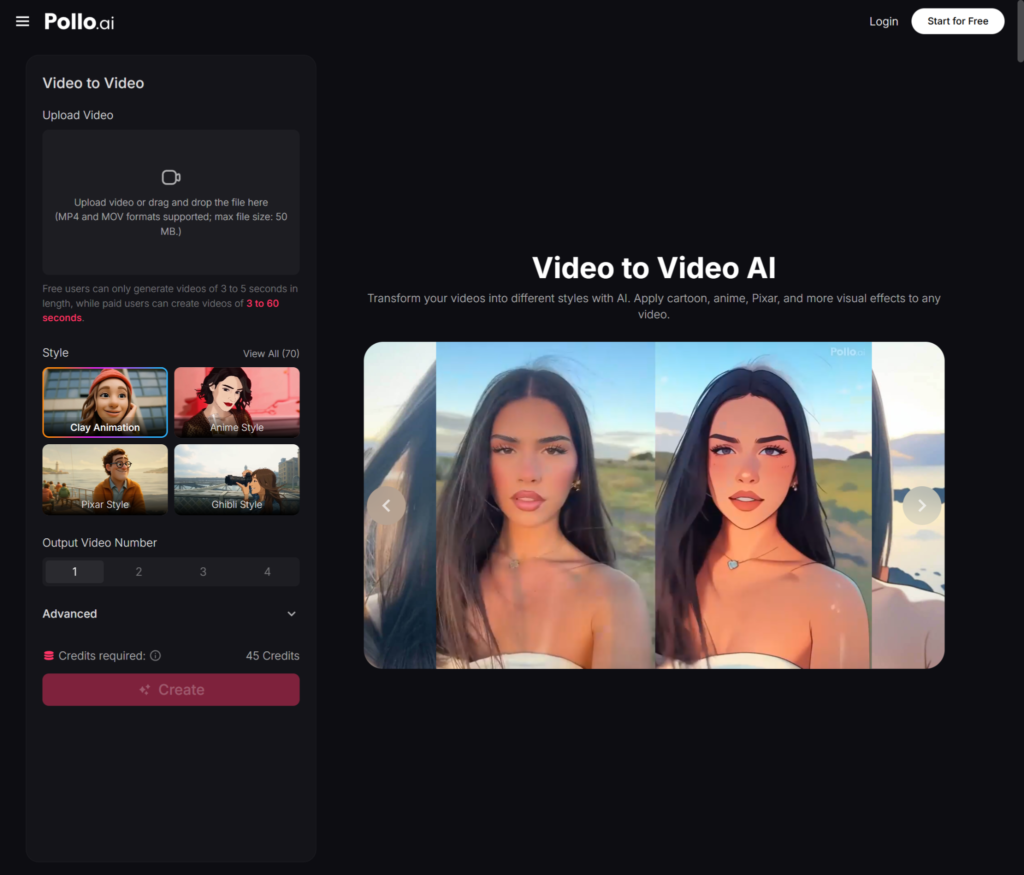
The video to video tool on Pollo AI handles this transformation in a workflow built for marketing teams that need to move quickly. You bring the existing footage; Pollo AI processes the transformation. The output is production-ready across the format requirements of different distribution channels, which means the footage upgrade doesn’t require a separate editing pass before it can be published. For early-stage startups managing marketing without a dedicated video production resource, Pollo AI makes it feasible to maintain a high-quality video presence across platforms without rebuilding content from scratch every time brand standards evolve.
The Startup Use Cases That Justify the Investment
Understanding which video transformation scenarios deliver the clearest return helps marketing teams prioritize where to apply the technology rather than trying to run every piece of content through AI processing.
Legacy product demos and explainers are the highest-priority candidates. Most startups produce a product demo early in their journey when the product is new but the brand and production standards are still developing. By the time the company has figured out its visual identity and built a brand with genuine equity, that demo — which potential customers will find through search and still watch — reflects a version of the company that no longer exists. Video transformation can update the visual treatment of these assets to match current brand standards without requiring a new recording.
Investor and pitch content often needs to be refreshed for different rounds without complete reconstruction. The narrative of a Series A pitch video differs from the same company’s Series B story, but the underlying footage of the product, the team, and the technology is often still usable. AI transformation allows the visual treatment and atmospheric quality of this content to be elevated to match the company’s current stage without a full production cycle.
Social media content optimization is the highest-volume application. Maintaining a genuine video presence across LinkedIn, Instagram, YouTube Shorts, and Twitter/X requires content in different formats and visual registers. Startup marketing teams that are producing one piece of video content and distributing it uniformly across platforms are leaving reach on the table. Video to video AI makes it practical to generate platform-specific versions from each piece of content — vertical for Reels and Shorts, square for LinkedIn and Twitter, horizontal for YouTube — with the compositional intelligence to make each version work in its intended format.
Brand consistency across a content library is a challenge for any company that has been producing video content over multiple years with evolving brand standards. AI transformation can be applied systematically to bring older content into visual alignment with current brand guidelines, producing a cohesive content archive rather than one that reveals the company’s visual evolution in a way that undermines brand authority.
Cinematic Quality for High-Stakes Video
Video to video transformation handles the style and format optimization layer. When the requirement is for the highest possible visual quality — brand campaign content, investor communications, product launch video that will anchor a significant marketing push — the output standard needs to match the stakes.
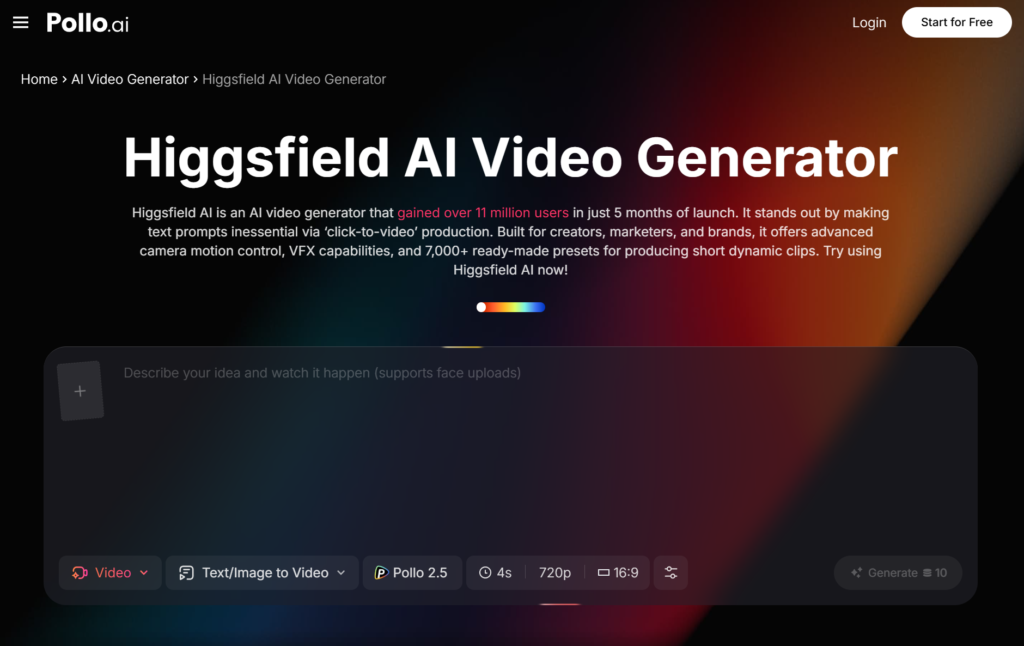
Higgsfield AI, accessible through Pollo AI, addresses this end of the quality spectrum. It generates and processes video with film-grade lighting physics, motion coherence, and a cinematic aesthetic register that holds up against professionally produced footage. For startups whose brand positioning has reached the point where visual quality is a direct signal of company credibility — consumer-facing brands in competitive categories, B2B SaaS companies pitching enterprise clients, startups in fundraising mode — Higgsfield AI’s output quality makes AI-assisted video competitive with traditional production for high-visibility applications. Pollo AI providing both the video-to-video transformation capability for volume content and Higgsfield AI for premium production needs means marketing teams can match the production approach to the stakes of each content type without managing separate vendor relationships for different quality tiers.
Building a Video Content Upgrade Strategy
The most efficient approach to applying AI video transformation in a startup context is systematic rather than opportunistic. Rather than processing individual videos as the need arises, building a content audit and upgrade workflow produces more consistent results.
Start by cataloguing your existing video content by type, age, and current performance. Product demos, testimonials, social content, pitch materials, event recordings — each category has different upgrade priorities and different transformation approaches that work best. Performance data tells you which content is still actively driving results and therefore worth upgrading, and which has effectively stopped being discovered and is therefore a lower priority.
Apply transformation to high-traffic, high-visibility content first. A product demo that still ranks in YouTube search and drives consistent views every month has compounding value from being upgraded — every future view benefits from the improved visual quality. A piece of social content that generated reach at posting but is now buried in the feed has lower upgrade priority.
Build format optimization into every content production workflow going forward. Every new piece of video content should be processed for platform-specific formats at the time of production rather than as an afterthought. This habit eliminates the backlog problem over time and ensures that future content starts its distribution life optimized for every channel rather than requiring post-publication adjustment.
The Competitive Dimension
There’s a timing argument for startup marketing teams evaluating AI video tools that’s worth addressing directly. Most of your competitors are still treating video as a high-cost, high-overhead production category that gets resourced inconsistently. The startup that builds a systematic AI-assisted video workflow now — that maintains a consistently high-quality video presence across platforms, keeps its content library current, and moves quickly from concept to distribution — creates a visible marketing quality advantage that compounds over time.
That advantage is available right now. The tools exist, the quality threshold has been cleared for most marketing applications, and the organizational knowledge required to use them effectively is still uncommon enough that building it early matters. In six to twelve months, AI-assisted video production will be a baseline expectation rather than a differentiator. Building the capability before it becomes baseline is when the advantage is largest.