
One year, a platform is virtually unknown. The next, traders, investors, and digital finance communities start mentioning the same name repeatedly across online conversations.
That’s how momentum in fintech often begins.
Quietly at first.
Then suddenly everywhere.
As online trading continues evolving around crypto, mobile investing, and digital finance, newer platforms are beginning to attract attention from users looking for faster and more modern trading experiences.
One name increasingly appearing in that conversation is Insipix.
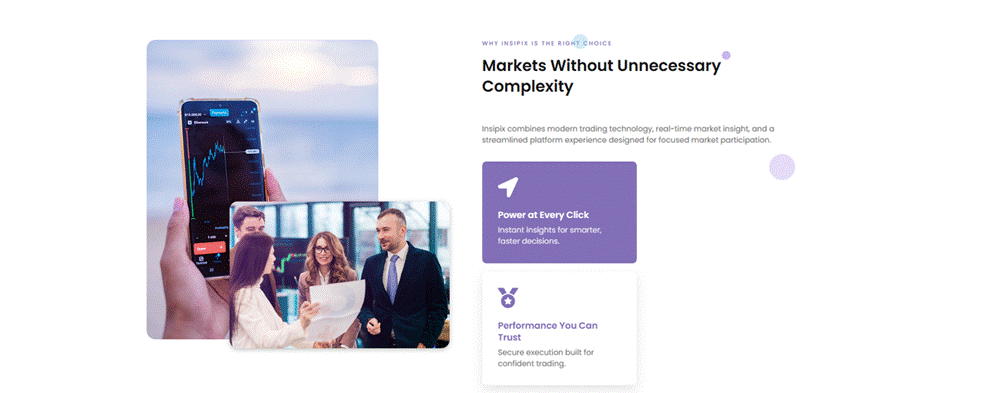
The Online Trading Industry Is Changing Rapidly
The world of finance no longer revolves around traditional systems alone.
Today’s investors operate inside a digital environment driven by:
- mobile access,
- real-time market movement,
- cryptocurrency trading,
- and globally connected financial ecosystems.
Modern traders expect platforms to feel intuitive, responsive, and built for speed.
The days of overly complex systems designed only for professional trading desks are fading.
Users now prioritize:
- usability,
- accessibility,
- cross-device functionality,
- and seamless market interaction.
This shift is reshaping the entire online trading industry.
Why New Fintech Platforms Are Growing Faster
The biggest driver behind modern fintech growth is changing user behavior.
A new generation of investors grew up with smartphones, instant access, and digital-first experiences. Naturally, they expect online finance to work the same way.
That expectation accelerated dramatically after the rise of cryptocurrency.
Bitcoin, Ethereum, and digital assets introduced a nonstop global trading environment where users interact with markets around the clock.
As a result, fintech companies were forced to evolve faster than traditional financial institutions ever anticipated.
Platforms that adapt quickly to these expectations are increasingly gaining visibility inside the trading space.
Why Platforms Like Insipix Are Getting Attention
Across the fintech industry, users are moving toward platforms that emphasize:
- speed,
- simplicity,
- mobile accessibility,
- and modern digital experiences.
Insipix reflects part of this broader movement happening across online trading and digital finance.
As competition intensifies, platforms are no longer judged only by access to financial markets.
Users now care deeply about:
- interface design,
- onboarding experience,
- platform responsiveness,
- and overall digital usability.
This evolution is pushing fintech into a much more user-driven online trading direction.
Crypto Accelerated the Digital Finance Revolution
Crypto markets fundamentally changed how users interact with financial platforms.
Markets became:
- nonstop,
- mobile,
- highly reactive,
- and globally connected.
This forced fintech companies to rethink everything from infrastructure to user experience.
Today’s traders can monitor Bitcoin, Ethereum, forex, and digital assets directly from their phones in real time from almost anywhere in the world.
That level of accessibility permanently changed expectations across the industry.
The Fintech Industry Is Entering a New Phase
The next era of fintech will likely revolve around:
- digital-first finance,
- AI-enhanced trading tools,
- blockchain integration,
- mobile investing,
- and globally connected trading ecosystems.
But underneath all the technology, one thing matters most:
User experience.
Modern investors want financial platforms that feel fast, simple, and connected to the digital lifestyle they already live every day.
That demand continues driving growth across online trading and fintech globally.
Conclusion
The online trading landscape is evolving quickly.
New technologies, changing investor behavior, and the rise of digital finance are creating opportunities for platforms capable of adapting to modern expectations.
Insipix is becoming part of that larger conversation happening across fintech and digital trading ecosystems.
And as crypto adoption, mobile investing, and online finance continue expanding globally, the platforms positioned around accessibility, usability, and modern digital experiences may continue attracting growing attention in the years ahead.