The publication of Intel’s quarterly financial statements last month was a turning point for the company, which in recent years has been losing ground to competitors in key market segments. Amid the artificial intelligence boom, demand for central processing units has risen sharply, allowing Intel to demonstrate one of the strongest stock performances in its 55-year history. In April alone, shares jumped by more than 120%, placing the company among the top stock gainers, and its market capitalization exceeded $470 billion. For comparison, the previous record of 70% growth dates back to 1973.
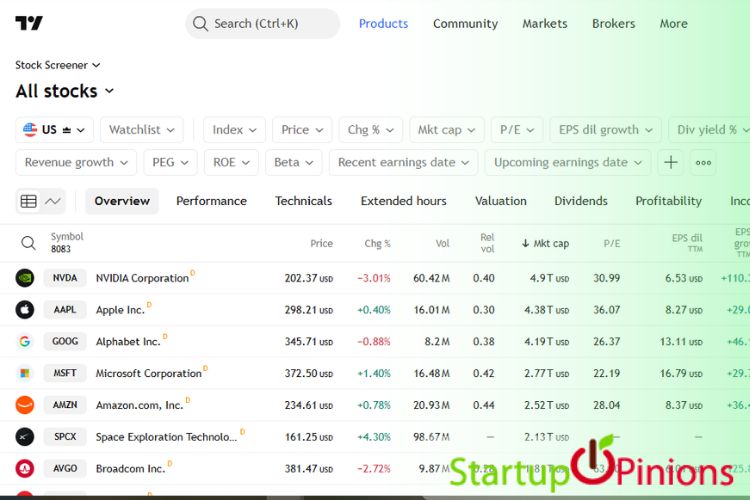
This leap, which secured a higher position for Intel on the stock screener, is largely due to a change in the perceived role of the CPU in AI infrastructure rather than current financial results. Previously, the market relied mainly on accelerators, primarily Nvidia solutions, but now industry participants recognize that central processors are becoming a bottleneck when scaling systems. The CPU market is expected to more than double by 2030, creating a window of opportunity for Intel that it has not had in recent years.
Financial indicators only partially confirm this optimism, but they still look convincing. By the end of the quarter, Intel’s revenue grew by 7.2% to $12.67 billion, and the data center segment immediately added 22%, reaching $5.1 billion. More than 40% of the company’s total revenue is now generated by server solutions, reflecting a shift in demand toward AI infrastructure. The company’s management, led by Lip-Bu Tan, emphasizes that demand outstrips supply in almost all areas, especially in the Xeon segment.
However, structural problems remain under the surface of the rally. Despite revenue growth and margin improvement to 41%, Intel ended the quarter with a net loss of $4.28 billion. Contract manufacturing remains the main source of pressure. With revenue of $5.4 billion, it still depends mainly on domestic orders and generated an operating loss of $2.4 billion. External clients provided only $174 million, which stands in stark contrast to investor expectations, as up to 75% of the company’s current capitalization is tied to hopes for the success of the foundry business, according to analysts.
In this context, Intel’s cooperation with Tesla and SpaceX, initiated by Elon Musk, is of particular importance. The Terafab project in Texas and plans to use the Intel 14A process technology have become key drivers of the stock growth. The market views this as a potential confirmation of the competitiveness of Intel’s future technologies, especially given that we are talking about customers with extremely high demands on AI computing infrastructure.
At the same time, the format of cooperation remains uncertain. Tesla can both license the technology and purchase ready-made chips. In any case, the very fact of interest in 14A is important for Intel, since its current 18A process technology has not yet attracted a significant number of external customers. At the same time, Musk’s companies intend to invest about $3 billion in a research center with an experimental line, which further enhances vertical integration and reduces dependence on traditional contractors like TSMC.
An additional growth factor for Intel is the contract chip packaging segment, where Amazon, Cisco, and the same Musk-related companies already appear among potential customers. CFO David Zinsner expects that this business will be able to generate not hundreds of millions, but billions of dollars in revenue annually. Against the backdrop of capacity shortage among competitors, this seems to be a realistic scenario, although its scale remains questionable.
As a result, Intel’s current stock growth is largely a bet on the future. The company is indeed benefiting from a change in the architecture of the AI infrastructure, where CPUs are regaining their strategic role. At the same time, a significant part of the capitalization already reflects expectations related to contract manufacturing and new technological processes, which have yet to be proven in practice. It is the balance between these factors that will determine whether the current rally proves sustainable or becomes another episode of volatility in the company’s history.