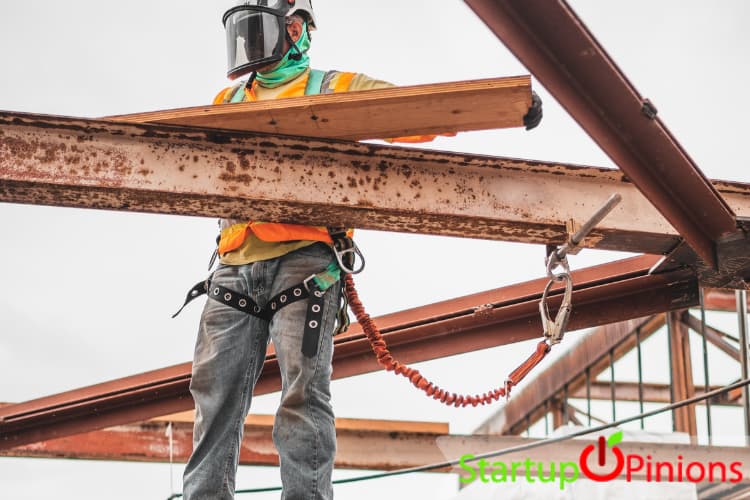
When it comes to modern construction standards, the industry is facing more than a labor shortage, it is facing a fundamental breakdown in traditional talent acquisition. Today’s construction leaders understand that expertise in construction projects is multi modal and diverse.
That means the industry is no longer limited to engineering alone. It requires a seamless integration of technical expertise, enhanced administrative coordination, curated operational systems, compliance management, and field leadership. As projects become more complex and timelines more demanding, specialized third-party construction services have become a practical one-stop gateway to accessing complete, project-ready expertise across every level of execution.
1 Construction’s Labor Crisis Is Not What Most Companies Think
A lot of construction firms still believe the labor shortage is about a lack of applicants. It is not.There are applications everywhere. Job boards are full. Resumes keep coming in. Yet projects still stall, timelines slip, and field operations become chaotic. The issue is not quantity anymore. It is capability.
The people who actually know how to run a difficult site, recover a delayed schedule, manage subcontractor pressure, and maintain safety discipline under impossible deadlines are usually already employed. They are leading active builds right now. They are not casually scrolling job platforms during lunch breaks hoping someone notices their resume.That is the disconnect many construction companies still refuse to confront.
Nationally, the AGC reports that 85% to 88% of construction firms heavily struggle to fill key craft and professional positions, according to their 2025 construction hiring data. Such workforce shortages actively delay projects; the damage is no longer theoretical, it is operational.
Experienced construction recruiting experts precisely understand this national struggle, leveraging these insights to provide solutions that help commercial contractors mitigate risk, stabilize project delivery, and secure critical path leadership ahead of time.And when leadership gaps hit a project, everything downstream starts feeling it. Subcontractors lose rhythm. Clients become impatient. Compliance pressure rises. Margins quietly bleed out week after week.
2. Hiring Strategies: Resumes Do Not Build Projects, People Do
In a highly technical, fast-moving field, project managers may rely on a resume that passes digital filters. That’s where standard recruitment starts failing in the construction sector. Depending on a well-formatted document for actual operational capability is a high-risk error.
Partnering with a specialized construction recruiting firm helps eliminate this vulnerability by shifting the focus from what candidates claim they can do on paper to leveraging experts with verifiable track records tied to real-world projects which align with actual on-site delivery, safety performance, and margin protection under pressure.
Someone can list fifteen years of experience and still fail to control a chaotic site. Another candidate may interview well but fold under schedule pressure three weeks into mobilization. Construction exposes people quickly because there is nowhere to hide on an active project.
- Can they handle conflict without slowing production?
- Can they lead crews without destroying morale?
- Can they solve problems before owners start asking questions?
Those answers never come from keywords on a PDF.This rigorous evaluation helps establish strict criteria for a successful build while maintaining a professional, objective, and authoritative operational environment across all construction projects.
3. Why Third-Party Construction Sourcing Is Becoming Essential
The best construction recruiters do not operate like traditional recruiters. They operate more like industry insiders with market intelligence.They know who just completed a healthcare expansion. They know which Superintendent consistently delivers clean closeouts. They know which Project Executive quietly rescued a failing build six months ago without public attention.
That level of access changes everything.Instead of waiting for candidates to apply, specialized sourcing firms actively map the market. They track regional developments, contractor movement, project awards, and leadership transitions. More importantly, they know how to approach passive talent professionally, without sounding transactional or desperate.
That matters because high-level construction professionals are not looking for “jobs.” They are evaluating risk, leadership culture, project quality, and long-term opportunity.
I. Slow Hiring Is Costing More Than Companies Admit
Delayed hiring creates immediate financial liabilities on active builds. An empty leadership seat spreads pressure across the entire operation: procurement slows, RFIs stack up, site coordination weakens, and foremen lose direction. While a three-month hiring cycle might function in corporate environments, it causes invisible daily margin losses on a live commercial project.
Internal HR departments often face capacity bottlenecks across multiple divisions, but construction moves in real time. Specialized sourcing firms compress these timelines to accelerate rapid project mobilizations following contract awards, specifically on high-stakes industrial or infrastructure expansions bound to aggressive completion deadlines.
For example, when a company is trying to secure a lead Superintendent for a $200 million build, or replace a Project Executive during an active expansion, the conversation changes completely. At that level, hiring stops being administrative and becomes strategic risk management.
And frankly, the cost of the wrong hire in such circumstances is brutal. That’s when project managers in commercial construction realize they are not paying recruiters for resumes. They are paying for judgment, access, verification, and speed under pressure.
II. Leveraging Recruiter Services vs. Hiring In-House
The question is not which is better. A blend of internal and external sourcing models becomes a crucial framework that provides strategic advantages in construction projects. The shift happening across the industry is subtle but important: workforce strategy is becoming part of operational strategy.
Professional recruiter services become foundational in helping companies to balance their standard administrative processing with guaranteed access to specialized construction expertise.
On the other hand, internal teams remain highly crucial in infusing company culture, technical safeguarding of the project, and maintaining the long-term continuity of core site crews. Successfully managing this combination dictates exactly where to focus organizational resources based on the specific risk profile of the open position. That directly enhances the critical path of an active build.
In essence, with experienced construction workforce sourcing firms, recruitment within the construction industry shifts from being a passive HR function that reacts when administrative and technical inefficiencies appear, to an active operational safeguard. It extends into forecasting labor availability, aligning talent with project sequencing, and ensuring that each phase of construction is supported by the right level of leadership and technical capability at the right time.